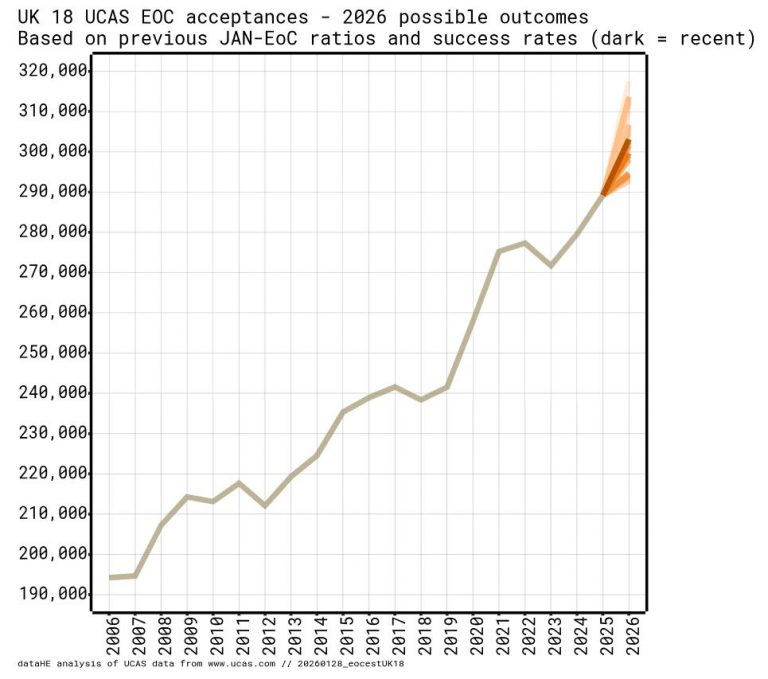



The UCAS 2026 January deadline data, released in February, revealed the highest number of applicants on record – an encouraging signal for the sector. Based on historical applicant trends and recent success rates, we modelled the potential impact of the new applicant pool on the 2026 end-of-cycle recruitment outcomes for UK 18-year-olds. All scenarios point to growth in the key domestic cohort, ranging from 1% to 9%, with the most likely outcome around +5%, bringing total acceptances to just over 300,000 (Figure 1).
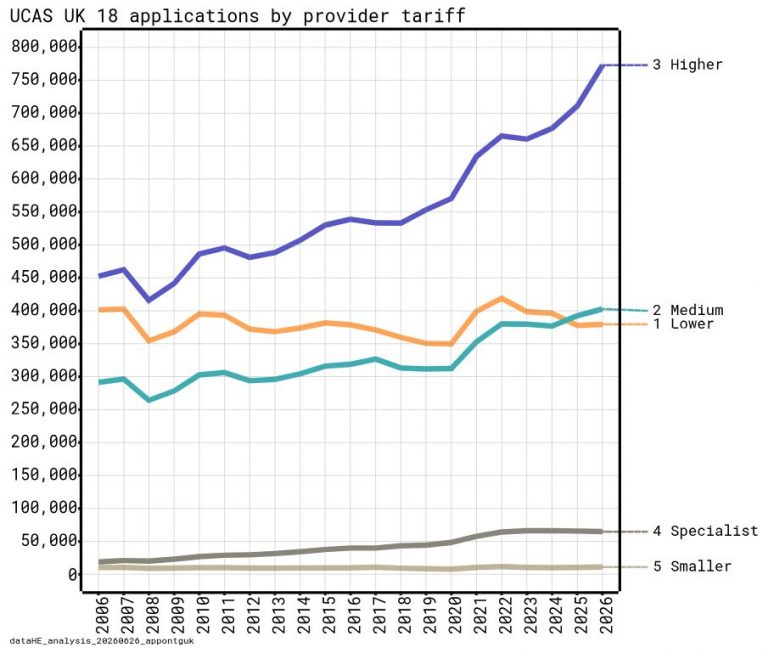
Growth, however, is uneven across provider types. Using UCAS’s newly introduced provider categories, reconstructed back to 2006, the strongest expansion in 2026 remains concentrated among higher tariff institutions, while most other groups remain broadly flat (Figure 2). Continued demand for higher tariff providers likely reflects the richer student experience they are able to offer at the same capped fee level, supported by higher international recruitment and associated income.
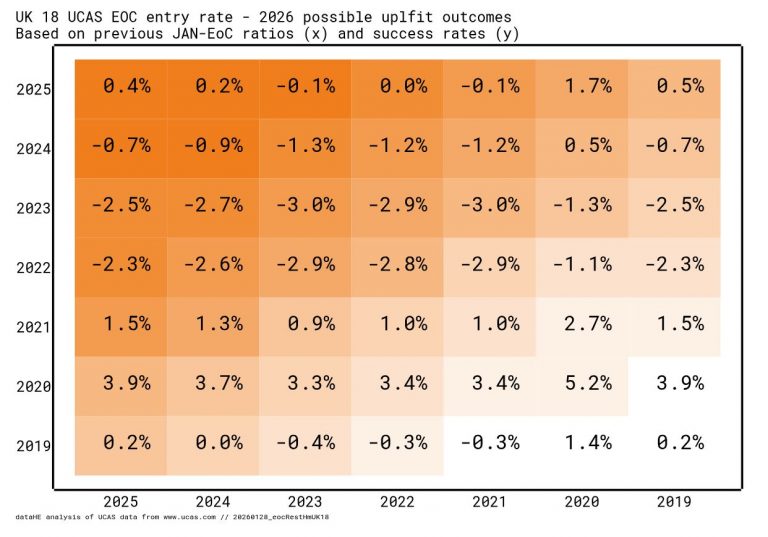
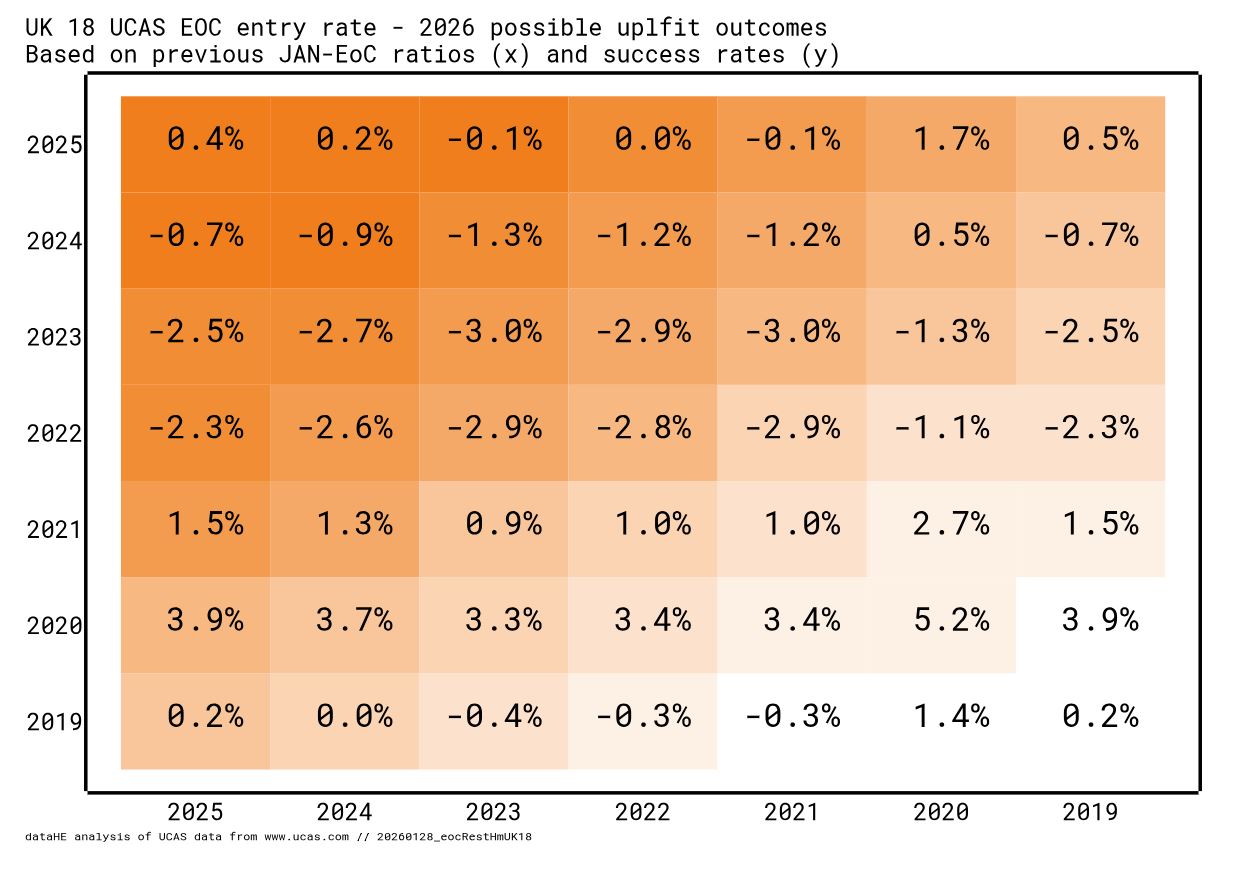
Despite record volumes of demand, the UK 18-year-old entry rate remains less certain. Scenario estimates range from a 3% decline to a 5% increase compared with 2025, with a modest +0.4% change in the most likely case (Figure 3). This suggests that any sector growth will be largely driven by an increase in population rather than by rising participation – a dynamic that may become critical as the UK approaches the projected 18-year-old population dip in 2030.